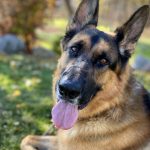


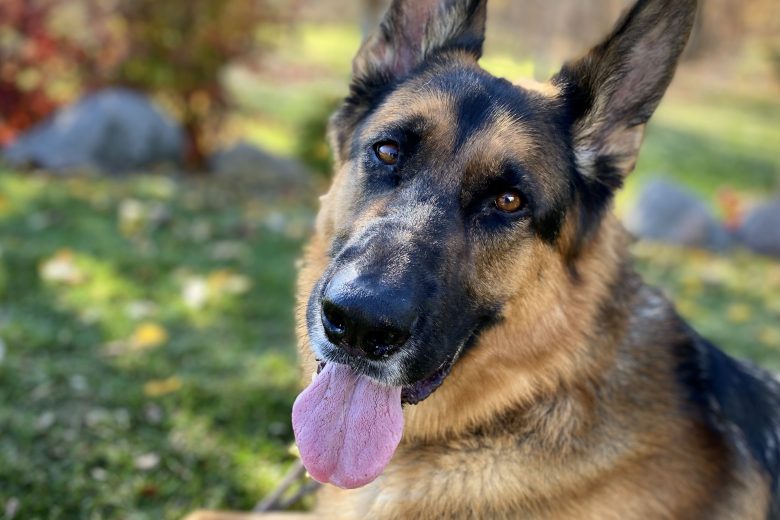
Tayzer was one of the most important dogs I’ve ever walked.
When I first met him, he was a ten-month-old German Shepherd with endless energy, a stubborn streak a mile wide, and complete confidence that he was in charge. For the next nine years, we’d see each other five days a week, an hour at a time. Looking back now, I realize that Tayzer didn’t just become one of my closest canine friends—he made me a better dog walker. 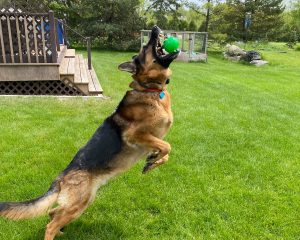
Adolescent German Shepherds can be a handful. They’re energetic, incredibly intelligent, stubborn at times, and always seem convinced they know best. I really wasn’t prepared for all of that, and Tayzer wasted no time teaching me.
He used to go through jumping fits where he would leap up on me and simply wouldn’t stop. He’d nip at my arms, shoulders, sleeves, jacket, or anything else within reach. We’d be walking along perfectly, and then, without warning, he’d turn and start jumping. Yelling at him didn’t help. If anything, it only made him more excited. He even ripped my winter coat—twice. I used to get so frustrated with him.
Now don’t get me wrong. Tayzer was a wonderful dog, and we had some amazing times playing and walking together. But when this behavior showed up, he was incredibly difficult to handle.
One Friday, he was especially bad, and I ended up driving to my next pet sit feeling genuinely angry. I was seriously considering dropping Tayzer as a client. I’d had enough.
But over the weekend, after I had time to calm down and reflect, I realized something important.
The issue wasn’t Tayzer. It was me.
I wasn’t giving him the leadership he needed. I was letting him get away with too many bad decisions, and then becoming frustrated when those decisions turned into unwanted behavior.
 I decided that on Monday I was going to become a better leader for Tayzer.
From that point on, I stopped letting him pull and get his way on our walks. I became more consistent, and I started paying much closer attention to his body language.
Over the next couple of weeks, things began to change. His behavior improved, our walks became more enjoyable, and our time together was better for both of us.
I also started noticing something interesting.
Just before he turned to jump on me, he always did the exact same thing. He’d make a little skip in his stride, turn his head, and give me this mischievous look. It was almost as if he was saying, “Ready?”
Once I recognized that tiny change in his body language, I could redirect him before the jumping ever started.
That lesson has stayed with me ever since. Dogs are constantly communicating with us. If we learn to recognize the small signals, we can often prevent the bigger behaviors before they happen.
Over the months that followed, Tayzer would occasionally slip back into his old habits. But each time, I realized I had slipped as well. I’d started letting him get away with things again. As soon as I stepped back into the leadership role, his behavior quickly improved.
When COVID hit, I didn’t see Tayzer for ten months. During that time, he matured.
When we were finally reunited, he had become an amazing dog. I could pet him without him wanting to mouth my hand. He came when I called. He even started giving me kisses.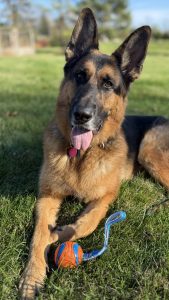
Tayzer passed away earlier this year. I had the privilege of caring for him for nine years, and over that time we developed a deep friendship. Those years after COVID were some of my favorites. We had so much fun together, and I miss my big buddy every day.
Tayzer taught me patience. He taught me to recognize the tiny pieces of body language that often lead to much bigger behaviors. He made me a better pet sitter and dog walker.
But the greatest lesson Tayzer ever taught me was that a dog doesn’t have to be your own to become one of your closest friends.
Even now, when I think about Tayzer, I don’t picture the jumping or the torn winter coat. I picture the amazing dog he became and the friend I was lucky enough to know for nine years.
Love you always, Tayz Maze.